This is an MVP
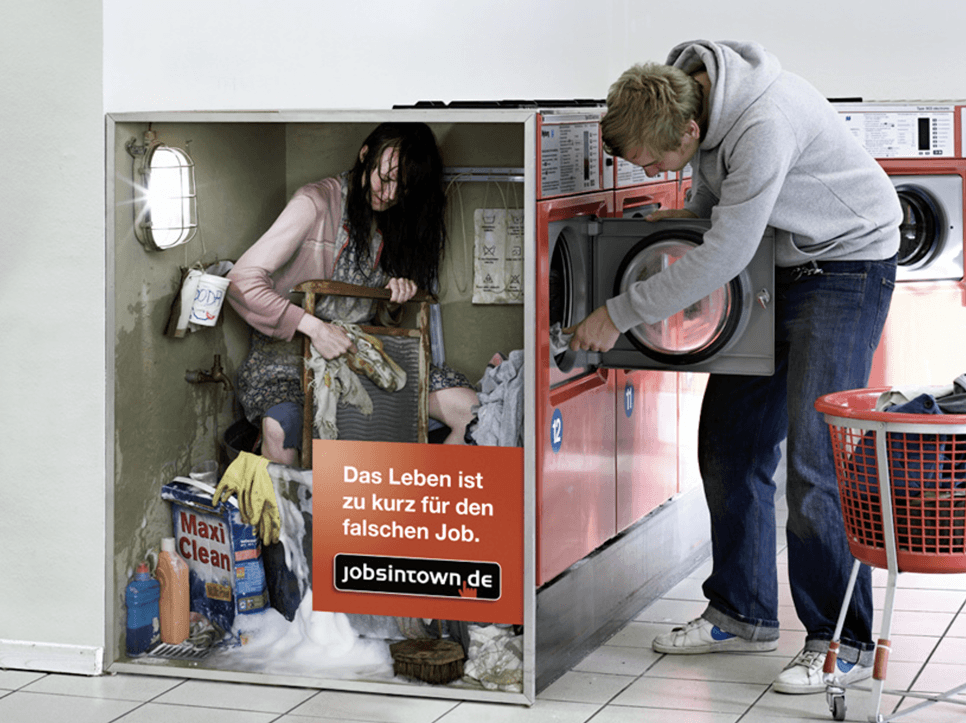
Because they want their clothes washed.
They get their clothes washed.
They paid for it.
They don't know it's being done by hand.
Because they want their clothes washed.
They get their clothes washed.
They paid for it.
They don't know it's being done by hand.
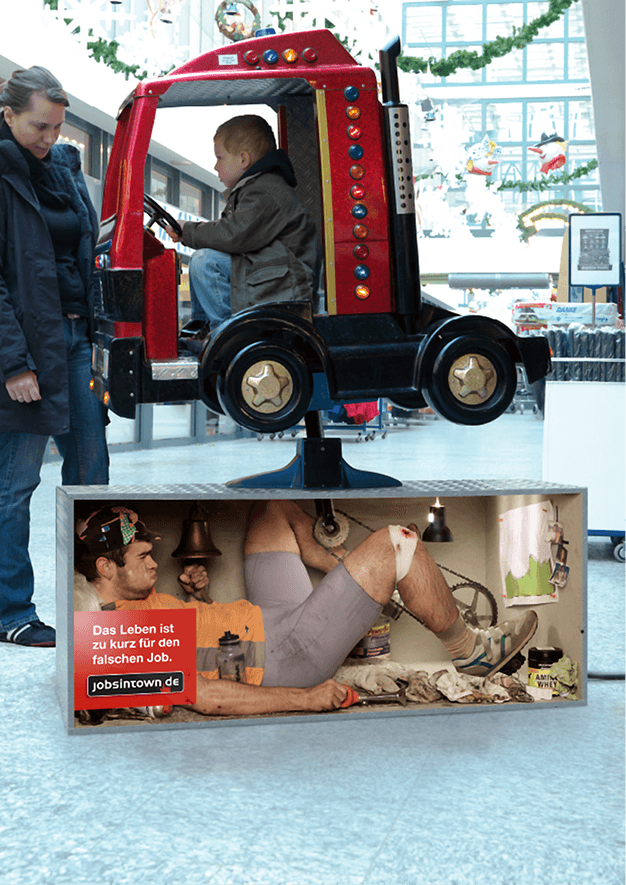
Because the child wants a ride.
They get their ride.
They paid for it.
They don't know it's being done by hand.
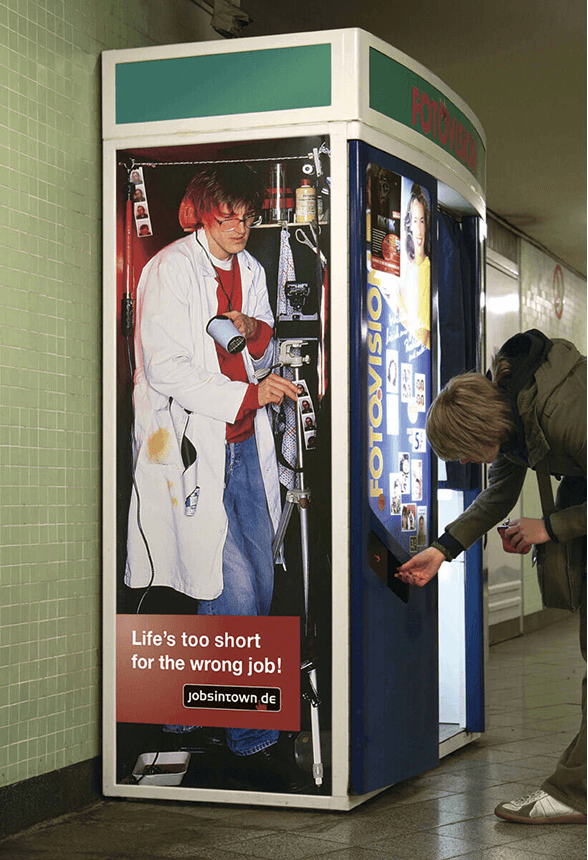
Because they want their photos taken.
They get their photos.
They paid for it.
They don't know it's being done by hand.
These images weren't created to explain MVPs. They were part of the brilliant “Life's too short for the wrong job” campaign for jobsintown.de, created by Scholz & Friends Berlin.
But they happen to demonstrate the idea perfectly.
You could actually run these products like this. Employ someone to wash the clothes. Power the ride by hand. Take and process the photos manually.
The customer still gets what they came for.
It wouldn't scale. It wouldn't be efficient. And it wouldn't be the finished product.
But it would work.
The point isn't to build a worse version of the finished product.
It's to build enough to find out whether people want the outcome before you invest in the technology needed to deliver it at scale.
If people use it, value it or pay for it, you've learned something real.
If they don't, you've learned something even more valuable: don't build the machine.
Sometimes you only need an MVT: a Minimum Viable Test.
If all you need to know is whether someone will put their clothes in the machine, you don't need to wash them.
A landing page, prototype, fake door or pre-order might tell you what you need to know.
But each only tests an assumption.
Eventually, someone has to get clean clothes.
And plenty of real products already work more like the person inside the washing machine than we'd care to admit.
Behind the interface, people copy data between spreadsheets, update Salesforce, change content in a CMS and manually process work that could eventually be automated.
Sometimes that's technical debt.
Sometimes it's simply cheaper to use people until there's enough demand to justify building the machinery.
MVP means different things to different people. This thinking is influenced by Marty Cagan's distinction between products and “MVP Tests”, and Jeff Patton's focus on outcomes over output.